
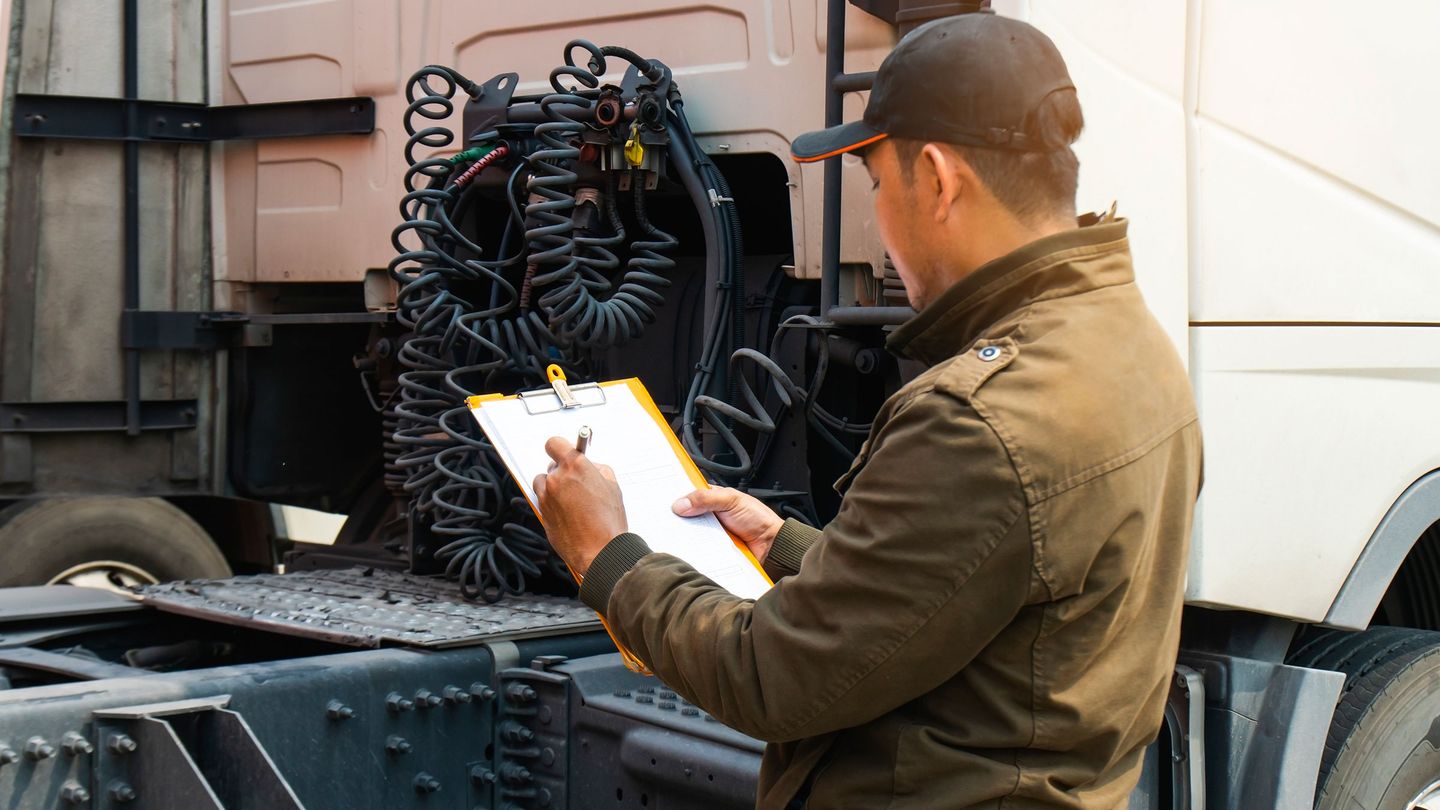
Home/DOT inspections
Service 03 • Compliance
Alaska DOT Certificates & Inspections
The federal annual inspection, done by a qualified inspector, with the defects repaired and the documentation in your hand before you leave — not a second appointment three weeks out.
- Annual (periodic) inspections under 49 CFR 396.17
- Tractors, semitrailers, full trailers and converter dollies
- Repairs and certification in the same visit
What the law actually asks of you
Short version, without the acronym soup.
Once every 12 months
Every component listed in Appendix A of Part 396 has to pass an inspection at least once in the preceding twelve months. The clock runs from the last day of the month the inspection was done.
Every unit, separately
Tractor, semitrailer, full trailer, converter dolly — each one is inspected and documented on its own. A current tractor does not cover the trailer behind it.
Proof stays on the vehicle
Either the inspection report or a decal showing the date, the carrier name and address, the vehicle identification and the pass certification has to be kept on the vehicle itself.
What we inspect
The full Appendix A scope — and we inspect it like somebody who is going to have to stand behind the signature.
- Brake systems, linings, drums, chambers and pushrod travel
- Air system, compressor, dryer, lines and leakage rates
- Steering components, linkage, gear box and free play
- Suspension, springs, air bags, hangers and attachments
- Frame, crossmembers, mountings and structural members
- Tires, wheels, rims, hubs, fasteners and wheel ends
- Coupling devices — fifth wheel, kingpin, pintle, safety chains
- Lighting devices, reflectors and conspicuity marking
- Exhaust system, fuel system and driveshaft components
- Windshield, wipers, glazing, mirrors and defrost
- Emergency equipment and required markings
- Any Alaska-specific wear items we know inspectors look for
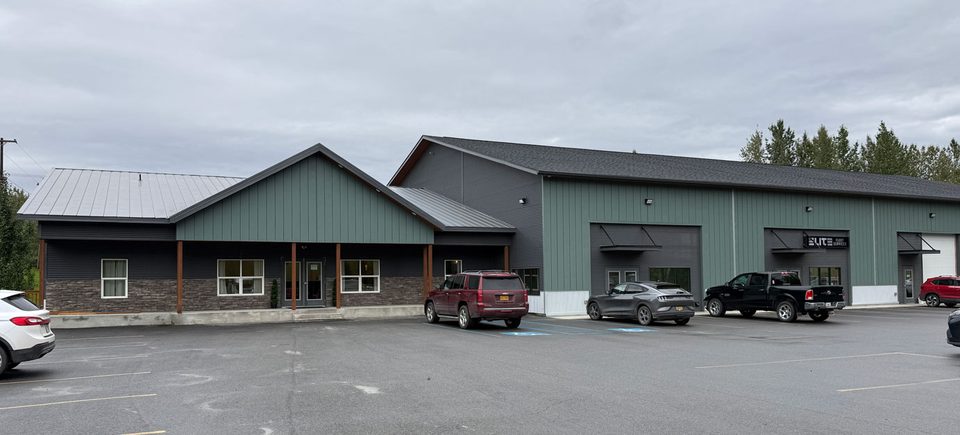
Inspections happen here, indoors and on a lift — not in a yard at twenty below.
Fleet inspection management
If you run more than a couple of units, the hard part isn’t the inspection — it’s remembering which of the fourteen trailers in the back row is about to go out of date.
We track the dates
Every unit we inspect goes on file with its expiry. You get a reminder before it lapses, not a phone call from a driver at a scale house.
We schedule around your season
Freight seasons and construction seasons don’t leave room for downtime. We’ll stagger the fleet through the slow months so nothing stacks up.
We keep copies
Your file, our file. When a report goes missing out of a truck — and it will — one phone call gets it re-issued.
DOT inspection questions
The rules below come from 49 CFR Part 396 and the Alaska DOT&PF Measurement Standards & Commercial Vehicle Compliance guidance. They’re a plain-language summary, not legal advice — when in doubt, ask us or check the regulation directly.
Does Alaska have its own state safety inspection I need?
Alaska does not run a state periodic inspection program the way some states do — but that does not mean you're off the hook. Alaska has adopted the federal regulations, and 49 CFR 396.17 requires every commercial motor vehicle to pass an annual inspection covering the components in Appendix A. The state's Commercial Vehicle Compliance officers enforce it at weigh stations, at roadside, and at terminal inspections in your own yard. In practice, the annual gets done at a shop with a qualified inspector — which is what we are.
What counts as a commercial motor vehicle here?
Alaska DOT&PF defines it as any vehicle or combination with a gross vehicle weight rating of 10,001 pounds or more used in commerce, any vehicle transporting placardable hazardous materials, or a passenger vehicle designed for 16 or more people including the driver. That 10,001 lb line catches a lot of operators who don't think of themselves as trucking companies — heavy pickups pulling equipment trailers, service trucks, dump trucks, and contractor rigs all land inside it.
How long is the inspection good for?
Twelve months, running from the last day of the month the inspection was performed. An inspection done any time in March is good through March 31 of the following year. We track your due dates and give you a heads-up before they lapse, because a lapsed annual is a violation that is entirely avoidable.
Does the paperwork have to be in the truck?
Yes. The rule requires that the proof — either the inspection report or a decal carrying the inspection date, the carrier or provider name and address, the vehicle identification, and the certification that it passed — be kept on the vehicle. We issue both, keep a copy on file, and can re-send it if it goes missing.
Do I need a separate inspection for every trailer?
Yes. Every unit in a combination gets its own annual: the tractor, each semitrailer, each full trailer, and each converter dolly. It's one of the most common things we find out of date when a new customer brings a yard full of equipment in for the first time.
Who is allowed to perform the annual inspection?
Under 49 CFR 396.19, the inspector has to understand the inspection criteria, know how to use the tools and methods involved, and have either federal or state-sponsored training or certification, or at least a year of combined relevant training and experience — manufacturer programs, work as a mechanic or inspector at a carrier or maintenance facility, commercial garage or fleet experience, or government inspection work. Brake work carries its own qualification standard on top of that. Carriers are required to keep evidence of their inspector's qualifications on file, which is one more reason to have a shop do it.
What happens if you find something during the inspection?
We tell you before we do anything. If it's a defect that fails the inspection, we quote the repair and — if you approve it — fix it while the unit is already in the bay, then certify it. You're not making a second trip and paying a second diagnostic fee just to get a sticker.
Get the annual done before it lapses
Book an inspection, or bring the whole yard in and let us stagger the fleet through the slow season.